22 October 2026
Château de Costaérès: the story of the castle on the sea at Trégastel
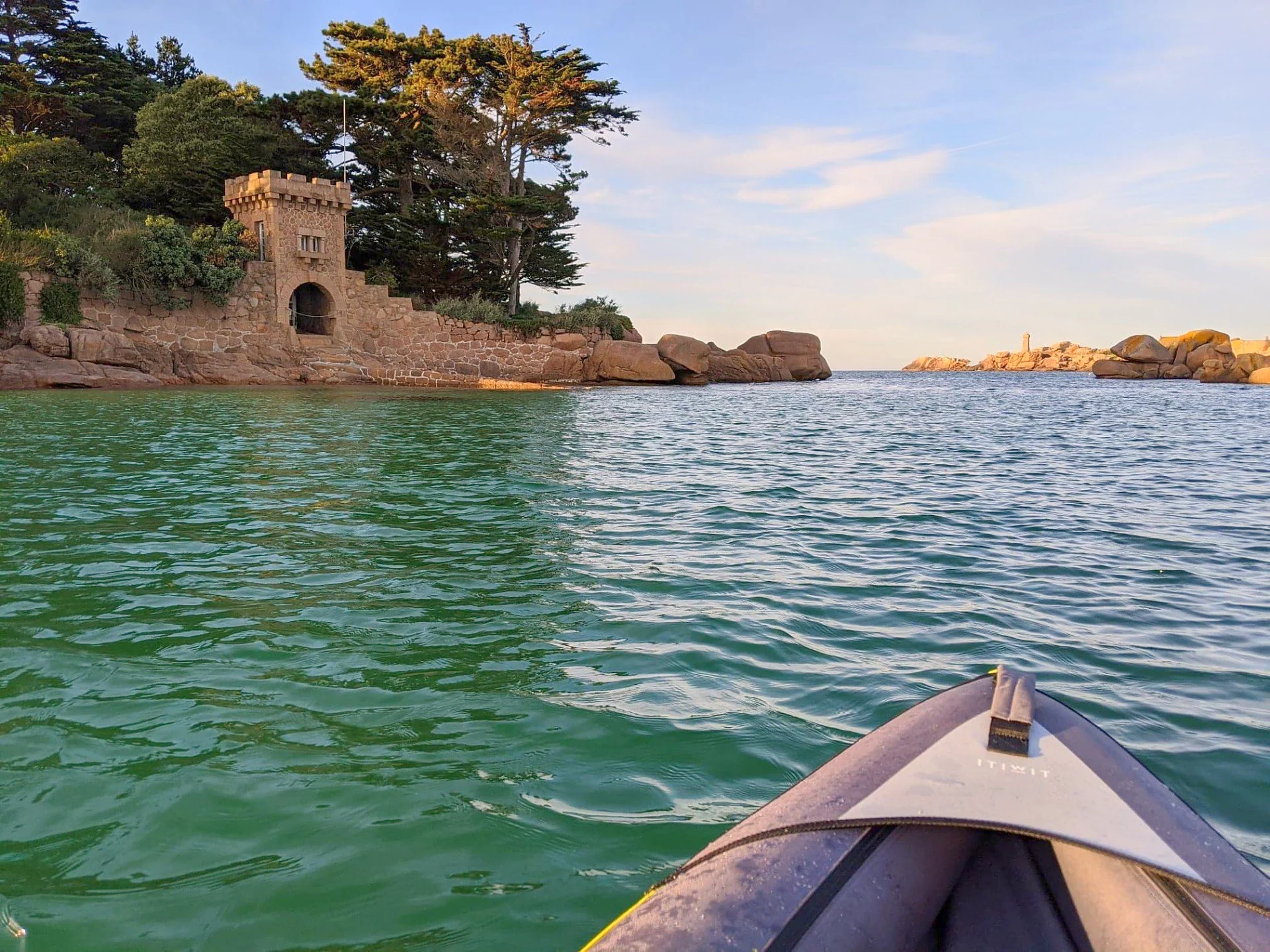
Perched on its granite islet opposite Tourony beach, Château de Costaérès is the most famous image of Trégastel. It isn’t open to visitors, but it can be seen from almost everywhere, and it has a remarkable history.
A castle for a Polish engineer
The castle was built in the late 19th century for Bruno Abakanowicz, a Polish-born engineer and mathematician who had settled in France, where his inventions had made his fortune. He bought the islet in 1892, and the house, designed by an architect from Lannion, was completed around 1896. It was built from pink granite quarried nearby at La Clarté, which is why it blends so seamlessly with the rocks.
Its name is thought to come from Breton and to refer to an old drying site, where fish or seaweed were once dried.
Sienkiewicz and the legend of Quo Vadis
Abakanowicz entertained friends there, including the Polish writer Henryk Sienkiewicz, future winner of the 1905 Nobel Prize in Literature, who stayed at the castle in 1898 and 1899. Local legend has it that he wrote *Quo Vadis* there. In fact, the novel had already been published in 1896, before his stays. The writer’s memory lives on all the same: a beach at Trégastel is still named Quo Vadis.
A private property
The castle still belongs to private owners. It is a private property: it is not open to visitors, and the islet is not a place for walking, even though low tide sometimes seems to open up a path to it.
Where to see it
- From Tourony beach, the classic viewpoint, whatever the tide.
- From the coastal path (sentier des douaniers), between Trégastel and Ploumanac’h.
- From a kayak, for a closer look, while keeping a respectful distance.
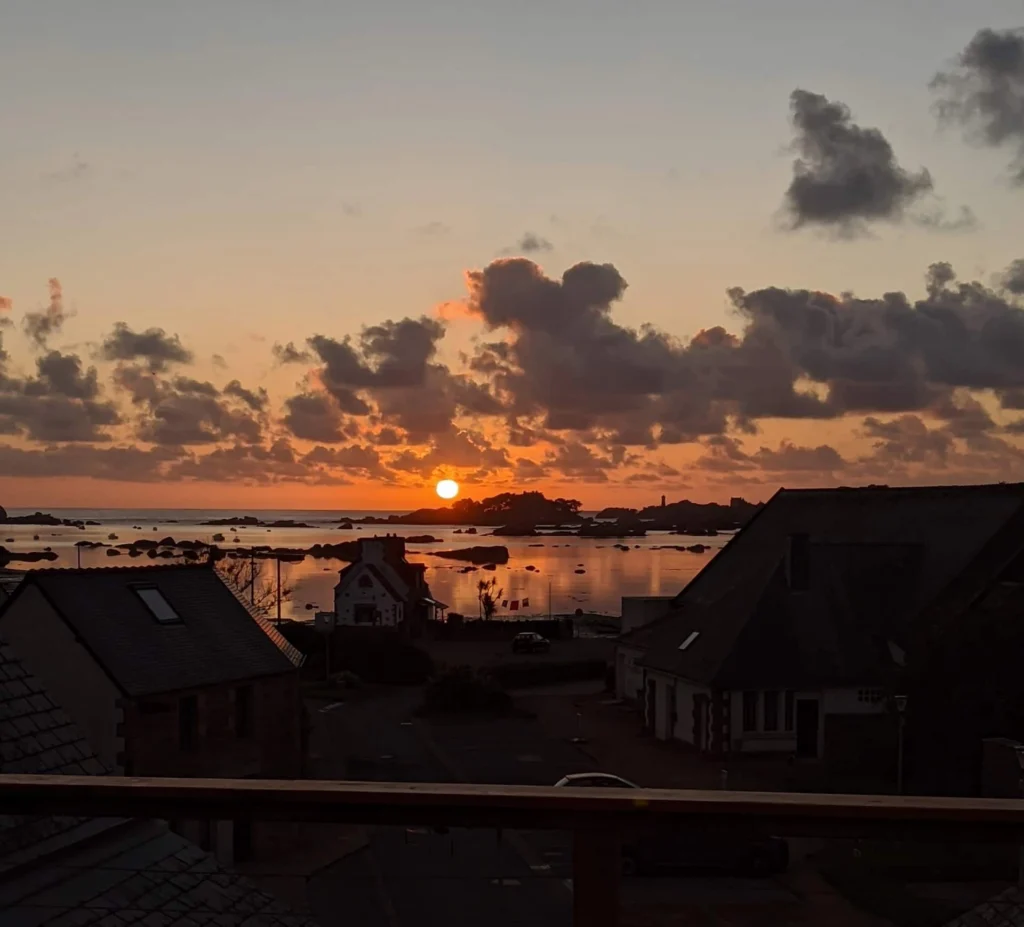
- From the terrace at L’Anse Roz: the view opens onto Costaérès, Ploumanac’h lighthouse and Sainte-Anne bay. At sunrise, it’s quite a sight.
For your stay
To wake up every morning facing Costaérès, discover L’Anse Roz. And for more, read our guide to the beaches of Trégastel.
Are your dates free?
Check the calendar and send your request: we reply usually within 6 hours (24 hours at most).
Check availability